

How to maintain and clean your mattress: complete guide
You spend about one-third of your life on your mattress, but how often do you think about maintaining it? A poorly maintained mattress quickly accumulates dust mites, dust, and bacteria that can affect your sleep and your health. This guide explains how to effectively maintain your mattress with simple and regular actions, without complications or expensive products. You will discover practical methods adapted to your daily routine.
Key points to remember
- Air out your bed every morning for at least 15 minutes to eliminate accumulated moisture
- Vacuum your mattress every two to four weeks to remove dust
- Wash your sheets at a minimum of 60°C once a week to eliminate dust mites
- Use a dust mite-proof protective cover to create an effective barrier
- Rotate your mattress every three to six months to ensure even wear
Why mattress maintenance is important
Your mattress accumulates sweat, dead skin cells, and heat every night, creating a perfect environment for dust mites and bacteria.
Dust mites and dust can cause allergic reactions and worsen pre-existing health conditions, such as asthma. A poorly maintained mattress also loses its comfort more quickly. Pressure zones sag and support decreases. Every movement in your bed releases particles into the air that you breathe all night long.
Essential daily actions
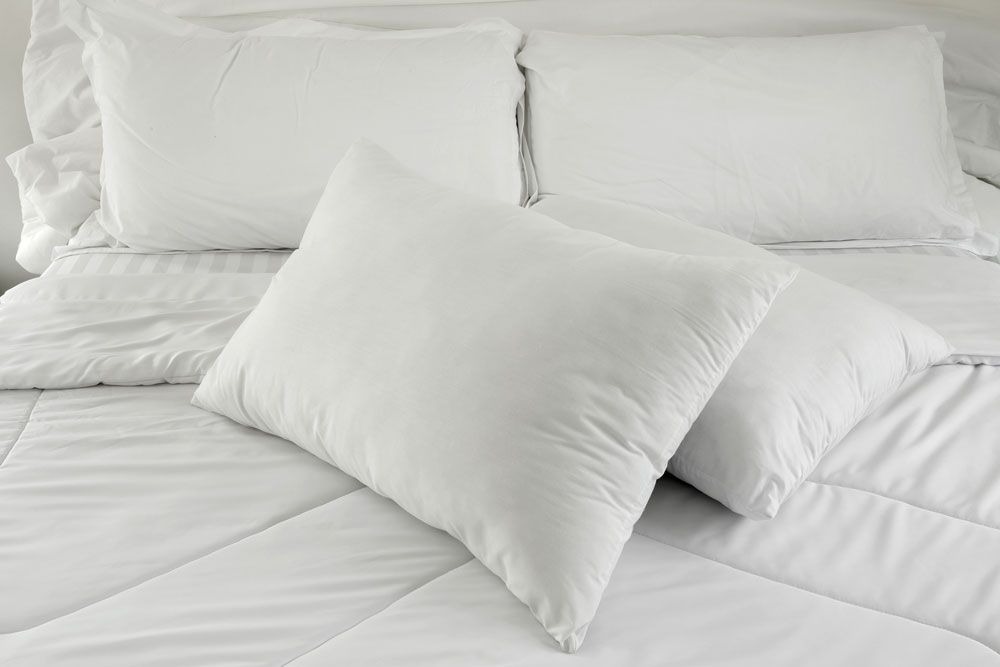
Air out your bed every morning. Remove the sheets and duvet for at least 15 minutes to release moisture and heat. Open the window to refresh the air.
Maintain a humidity level below 50%, as recommended by the Canadian Lung Association. Use a hygrometer to measure this level. Keep your bedroom temperature between 18 and 20°C maximum to limit dust mite growth.
Weekly and monthly cleaning
Wash bedding in hot water at least once a week to kill dust mites. The minimum effective temperature is 60°C. Dust mites do not survive at this temperature.
Every two to four weeks, vacuum the entire surface of your mattress. Use the crevice tool to clean seams and folds. A vacuum with a HEPA filter captures fine particles without releasing them back into the air.
Baking soda deodorizes and sanitizes your mattress. Sprinkle a thin layer, let it sit for two hours, then vacuum.
Recommended protections
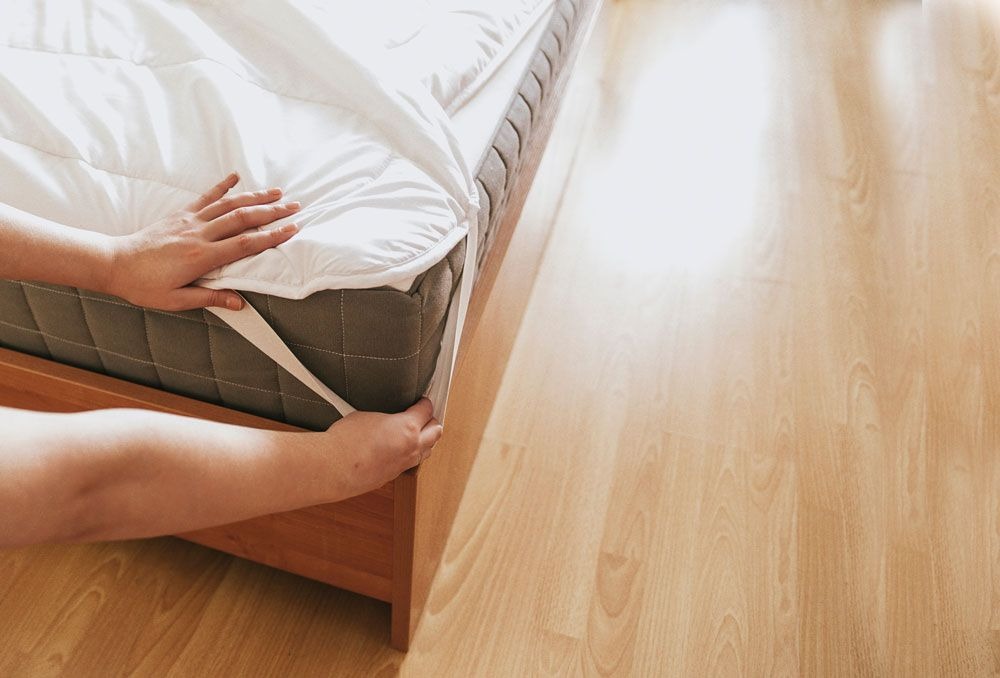
Cover your mattress and pillows with dust mite-proof covers. These covers create a physical barrier between you and allergens. Choose breathable models made of technical fabric. They should fully close with a zipper.
Natural latex limits dust mite accumulation thanks to its hypoallergenic properties. Removable-cover mattresses make maintenance easier. Custom mattresses can be equipped with suitable protective covers.
What to do in case of stains
Act quickly. Blot immediately with a clean, dry cloth to absorb the liquid without rubbing. Avoid soaking the mattress. Excess moisture creates a favorable environment for mold.
For organic stains, mix one part white vinegar with two parts water. Blot, let it sit, then dry. Make sure the mattress dries completely before making the bed again.
Maintenance frequency by action
| Action | Frequency | Why it’s important |
| Air out the bed | Daily | Removes nighttime moisture and reduces dust mites |
| Wash sheets | Weekly | Removes dead skin cells and kills dust mites at 60°C |
| Vacuum the mattress | Every 2–4 weeks | Removes dust and surface allergens |
| Rotate the mattress | Every 3–6 months | Ensures even wear and extends lifespan |
When to replace your mattress
A mattress should be replaced after 7 to 10 years of use, depending on its type and quality. Some signs indicate it’s time to change: you wake up with pain, the mattress shows visible sagging, or your allergy symptoms worsen despite maintenance.
Common mistakes to avoid
The most common mistake is neglecting maintenance until a problem occurs. Establish a simple routine from the start. Small but regular actions are more effective than occasional deep cleaning.
Avoid overly powerful steam cleaners that saturate the mattress with moisture. Prefer natural solutions like baking soda or diluted white vinegar.
Preserve the quality of your sleep
Regular maintenance of your mattress is an investment in your health. The few minutes spent each week on these simple actions will help you avoid allergy problems and premature replacement.
Remember that even the best maintenance cannot compensate for an unsuitable mattress. Dr du Matelas has been manufacturing custom mattresses for over 20 years in Sherbrooke. The mattresses are designed to last.
Make the right choice for your comfort
If you are looking for a mattress suited to your needs, the team at Dr du Matelas can advise you. We manufacture custom mattresses designed to be easy to maintain and built to last.
Contact us or visit the showroom in Sherbrooke. Delivery available throughout Quebec.
Frequently asked questions
Can you wash a mattress in a machine?
No, a mattress cannot be machine washed. Only removable covers can be. For the mattress itself, vacuum regularly and treat stains locally with a damp cloth. Baking soda is excellent for deodorizing without excessive moisture.
How often should you rotate your mattress?
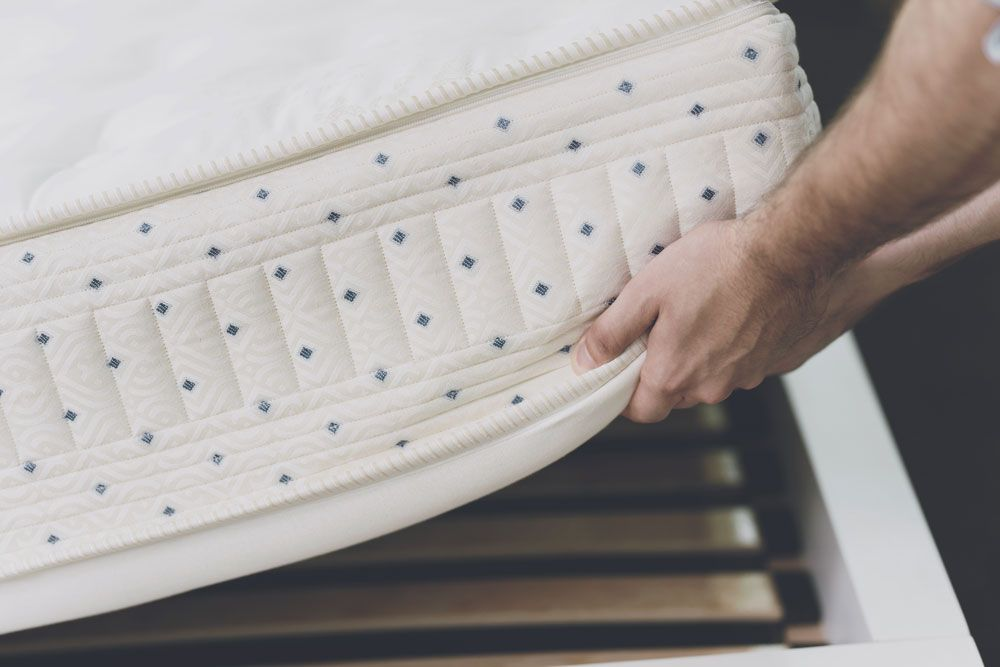
Rotate your mattress every three to six months to ensure even wear. This rotation significantly extends the mattress lifespan and maintains consistent comfort. Alternate between head-to-foot and top-to-bottom if your model allows it.
Are dust mite covers really effective?
Yes, dust mite covers create an effective physical barrier against allergens. They prevent dust mites in the mattress from coming into contact with you and limit the accumulation of new mites. Choose breathable models with a full zipper closure.
How do you remove a persistent odor from a mattress?
Generously sprinkle baking soda over the entire surface and let it sit for at least four hours, ideally overnight. Then vacuum thoroughly. Air out the room well and expose the mattress to sunlight if possible. If the odor persists, the mattress may be too old.
Should cleaning differ depending on the type of mattress?
The basic principles remain the same, but natural latex mattresses require less intensive maintenance as they are naturally antibacterial and breathable. Memory foam mattresses should never be excessively wet. Always follow the manufacturer’s recommendations for your specific model.