

Do you wake up with a stiff back or toss and turn for hours before falling asleep? These signs often indicate that your mattress no longer meets your needs. Choosing the right mattress can seem complicated with so many options for firmness, materials, and sizes. This guide clearly explains the criteria that really matter so you can make an informed choice.
Key points to remember
- The best mattress is one that supports the natural alignment of your spine
- The ideal firmness depends on your sleeping position and your weight
- The size of the mattress directly affects the quality of your sleep, especially for couples
- A mattress is usually replaced after several years of visible wear and tear
- A good night’s sleep has a direct impact on your physical and mental health
What Really Determines a Mattress’s Comfort?
The comfort of a mattress depends on two things: the support it provides for your spine while you sleep, and the feel of its surface, which can be firmer or more enveloping depending on the materials used.
Adequate, high-quality sleep is associated with significant benefits for physical and mental health, according to the Canadian 24-Hour Physical Activity Guidelines, which recommend 7 to 9 hours of high-quality sleep each night for adults aged 18 to 64. An unsuitable mattress can compromise sleep quality, even when the recommended duration of sleep is met.
The materials play different roles depending on your priorities. Memory foam conforms to the body’s shape and reduces pressure points, which is particularly helpful for people prone to joint pain. Pocket springs, on the other hand, focus more on improved airflow and motion isolation, which is appreciated by couples. In between the two, hybrid models remain the most versatile choice for most sleepers.
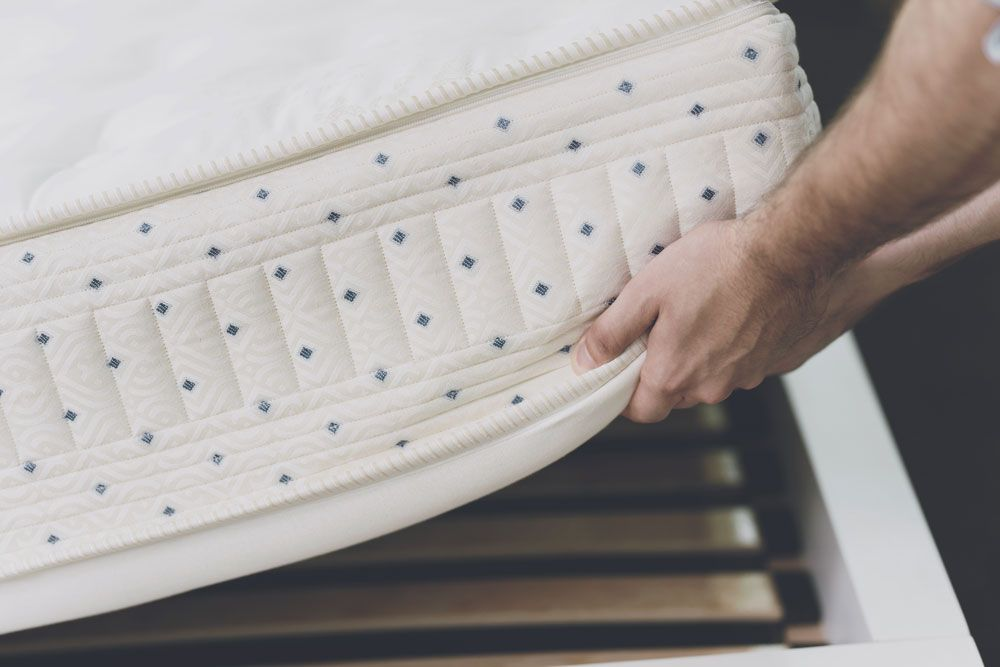
Which firmness level should you choose based on your sleeping position?
Your sleeping position remains the most important factor in choosing the right firmness. When sleeping on your side, a medium-firm to soft mattress allows your shoulders and hips to sink in slightly while keeping your spine aligned. When sleeping on your back, firmer support in the lower back is necessary. And when sleeping on your stomach, it’s best to choose a firm mattress to prevent your pelvis from sinking in too much.
Body weight is also a factor. A lighter person will often find a firm mattress too stiff and would be better off choosing a softer one, while a heavier person will need extra support to prevent the mattress from sagging prematurely.
What Mattress Size Is Right for You?
The size of the mattress directly affects the quality of sleep, especially for couples. Insufficient space can lead to more frequent awakenings caused byyour partner’s movements.
A single person can usually make do with a standard size. For couples, a larger size reduces disturbances during the night. Also consider the length: it should be slightly longer than the tallest person in the household; otherwise, the feeling of being cramped will set in quickly.
Why a Custom-Made Mattress Is Ideal
Standard sizes aren’t always a good fit. A room with unusual dimensions, an antique bed with a non-standard frame, or a very tall person can make standard sizes unsuitable. The custom-made mattress solves these problems by fitting precisely to the available space and the sleeper’s actual needs.
In fact, its appeal goes beyond mere size. It allows you to adjust the firmness based on each person’s body type and sleeping position, rather than having to settle for generic options that require compromise. For a couple with very different needs, two distinct levels of support can coexist in a single mattress, without either partner having to sacrifice comfort for the other.
This type of mattress is ideal for bunk beds, sofa beds, recreational vehicles, or custom-built furniture—anywhere where a standard size won’t fit properly. It also prevents gaps or overhangs that compromise support and accelerate wear and tear.
When off-the-shelf solutions are no longer sufficient for a specific situation, custom-made solutions often become the best choice.
Signs That It’s Time to Replace Your Mattress
- Visible sagging in the center or in areas subject to regular pressure
- Pain upon waking that wasn’t there before
- Squeaking or unusual noises at the slightest movement
- A persistent feeling of warmth during the night
- Less Restorative Sleep Despite Sufficient Duration

Decision Chart Based on Your Situation
| Situation | What This Means | What to Do |
| Pain upon waking | Spinal misalignment | Check the firmness level |
| Frequent Waking for Couples | Lack of freedom of movement | Consider a hybrid or pocket-spring model |
| Feels warm | Material with poor breathability | Choose a mattress with better airflow |
| Visible sagging | Mattress at the end of its useful life | Plan for replacement |
What to Do Now
Start by taking a look at your current sleep habits. If you wake up frequently with pain or if your mattress shows signs of wear and tear, it’s time for an assessment.
Mild, recent discomfort can sometimes be resolved by simply adjusting your bedding or sleeping position. But if the pain has persisted for several weeks, or if the mattress has visibly sagged, it’s best to plan for a replacement. And if you’re unsure which firmness level or material to choose, consulting a bedding specialist can help you avoid a choice that isn’t right for your body type.
For a Restful Night’s Sleep
Beyond choosing the right mattress, there are a few habits that support long-term sleep quality: keeping your bedroom cool and dark, avoiding screens before bedtime, and maintaining a regular bedtime. Combined with the right bedding, these habits maximize the benefits of a good night’s sleep.
In a nutshell
Choosing a mattress isn’t complicated once you know your sleeping position, body type, and the signs of wear to look out for. A good mattress won’t solve all your sleep problems, but it does eliminate a common and preventable cause of nighttime discomfort. Take the time to assess your needs before making a decision.
If you’re torn between several options or would like personalized advice based on your situation, our team can help you understand your needs and guide you in making your choice.
Contact us to get a better night’s sleep!
Frequently asked questions
How long does a mattress last, on average?
The lifespan varies depending on quality and maintenance, but signs such as sagging or pain upon waking generally indicate that a replacement is needed, regardless of the mattress’s exact age.
Is a firm mattress always better for your back?
No. The ideal firmness depends on your sleeping position and body weight. A mattress that is too firm can cause pressure points, just as a mattress that is too soft may not provide adequate support for the spine.
How can I tell if my current mattress is still right for me?
Pay attention to how you sleep and wake up. New pain, visible sagging, or persistent discomfort are clear signs that a reevaluation is needed.
Is a hybrid mattress suitable for all sleepers?
The hybrid mattress is suitable for a wide range of sleepers thanks to its combination of support and comfort. However, it’s still a good idea to check the specific firmness level based on your sleeping position.
Should a couple replace their mattress if only one partner is uncomfortable?
Not necessarily. Some models allow for different firmness levels on each side, which can solve the problem without compromising the other person’s comfort.